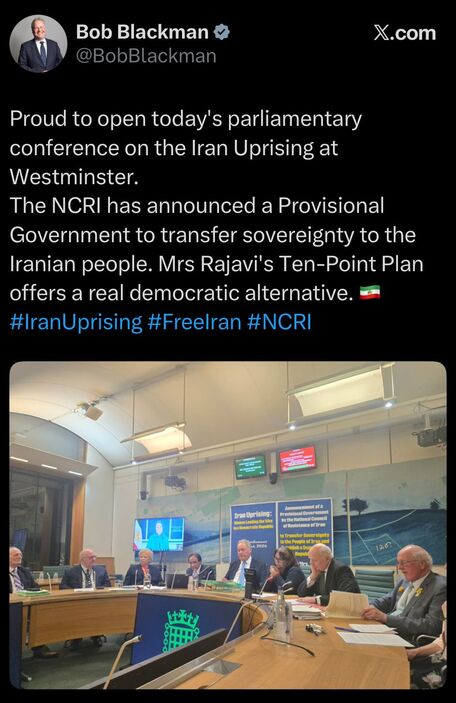
در ۵ مارس، باب بلکمن نماینده پارلمان بریتانیا، میزبان نشستی در وستمینستر بود که در آن سازمان مجاهدین خلق و شورای ملی مقاومت ایران به عنوان «آلترناتیو حکومت ایران» معرفی و تبلیغ شدند. این موضع برای بسیاری از ایرانیان، چه در داخل کشور و چه در میان ایرانیان خارج از کشور، بسیار نگرانکننده است.
سازمان مجاهدین خلق سابقهای طولانی و بسیار بحثبرانگیز در تاریخ معاصر ایران دارد. این سازمان سالها در فهرست گروههای تروریستی در ایالات متحده، اتحادیه اروپا و بریتانیا قرار داشت و گذشته آن برای بخش بزرگی از جامعه ایرانی با خشونت، فرقهگرایی و همکاریهای بحثبرانگیز گره خورده است. به همین دلیل، بسیاری از ایرانیان معتقدند این سازمان هیچ جایگاهی در آینده سیاسی ایران ندارد.
با این حال، آقای بلکمن همچنان از این گروه در پارلمان بریتانیا حمایت میکند و تلاش دارد آن را به عنوان گزینهای برای آینده ایران معرفی کند. این در حالی است که بخش بزرگی از جامعه ایرانی چنین ادعایی را رد میکند.
در مقابل، بسیاری از ایرانیان با دیدگاه های سیاسی متفاوت، از جمهوری خواه تا مشروطه خواه، امروز رضا پهلوی را به عنوان چهره ای ملی و نماد وحدت برای گذار دموکراتیک ایران می بینند. تصمیم درباره شکل نهایی حکومت در ایران باید تنها از طریق رای آزاد مردم ایران و در یک همه پرسی ملی گرفته شود، نه از طریق لابی گری یک سازمان خاص در پارلمان های خارجی.
ما معتقدیم نمایندگان پارلمان بریتانیا باید صدای طیف گسترده تری از ایرانیان را بشنوند و از معرفی یک گروه جنجالی به عنوان نماینده ملت ایران خودداری کنند.
اگر شما نیز با این نگرانی ها موافق هستید، می توانید از طریق لینک زیر پیام خود را مستقیما برای آقای باب بلکمن ارسال کنید و از او بخواهید موضع خود را در قبال حمایت از مجاهدین خلق بازنگری کند.
Member of Parliament for Harrow East
bob.blackman.mp@parliament.ukClick the button below to send this message directly to Bob Blackman MP.
Tell Bob Blackman: Iranians Reject MEK
Subject: Concern from Iranians in the UK regarding promotion of NCRI / MEK
Dear Mr Blackman,
Here is the corrected version, with grammar, punctuation, and flow improved while keeping your meaning and tone:
I am writing as an Iranian who has spent years engaged with civil society, human rights work, and the democratic aspirations of my country. I do not speak on behalf of any organisation. I speak only from lived experience, historical memory, and the overwhelming sentiment shared by Iranians inside and outside Iran.
On 5 March, an event was held in Westminster in which the Mojahedin e Khalq, or MEK, and its political wing, the National Council of Resistance of Iran, were presented as a viable “alternative” for Iran’s future. For many Iranians, this is not simply a point of disagreement, it is a source of deep concern.
The MEK has a long and well documented history that cannot be separated from its present. For years, it was designated a terrorist organisation by the United States, the European Union, and the United Kingdom. Its armed wing openly collaborated with Saddam Hussein during the Iran Iraq War, operating from Iraqi territory under his protection. In July 1988, as the war was ending and the Islamic regime had accepted a ceasefire, the MEK launched Operation Forough Javidan, a full scale military assault inside Iran’s Kermanshah province. Thousands of its fighters crossed the border from Iraq in coordination with Iraqi support. This episode remains one of the darkest and clearest reasons why the MEK has no social legitimacy among Iranians today.
The organisation’s internal structure further distances it from democratic norms. For more than four decades, its core members have lived in militarised camps, first in Iraq and now in Albania. Most are now in their sixties or older. Numerous testimonies from former members describe coercive control, enforced isolation from families, and punitive measures against those who attempt to leave. These are not the practices of a political movement preparing a democratic transition. They are the practices of a closed, ageing organisation struggling to preserve itself.
Inside Iran, the MEK has virtually no support. Its membership is estimated in the low thousands, and it has no presence in the daily life, political culture, or aspirations of the Iranian people. The organisation has even recently claimed responsibility for a non existent armed operation inside Iran, involving a dramatic story of more than a hundred casualties. Such announcements are familiar to Iranians. They reflect the MEK’s distance from realities on the ground, not its influence within the country.
Across the political spectrum, from republicans to constitutionalists to secular democrats, many Iranians today recognise Reza Pahlavi as a unifying national figure. This recognition is not about restoring a past system. It is about his consistent advocacy for a democratic transition grounded in a free national referendum. He is widely seen as someone who can bring together diverse political views and speak to the aspirations of a population seeking dignity, sovereignty, and self determination. For a large portion of Iranians, he represents a trusted voice for a democratic future chosen by the people themselves.
Britain’s relationship with Iran includes periods in which British policy directly intervened in Iranian internal affairs, often to the detriment of the Iranian people. This history is not abstract to us. It is part of our collective memory. It is precisely because of this legacy that contemporary engagement by British officials carries such weight. Many Iranians expect, and will insist, that this chapter of the relationship be defined not by the elevation of fringe groups that serve external interests, but by principled respect for the will of the Iranian people and their right to shape their own future.
It is therefore troubling to see the MEK presented in any official forum as a representative alternative for Iran. Such portrayals risk repeating a long and painful pattern in which foreign institutions promote groups that lack legitimacy among Iranians themselves. The MEK’s influence is sustained by lobbying abroad, not by support within Iran. Iranians today are acutely aware of how external actors have historically used our country as a stage for their own strategic aims. We are no longer willing to see decisions about Iran shaped by organisations that do not speak for us. At a moment when Iranians are risking their lives for democratic change, it is essential that international partners listen to the people themselves rather than to groups whose claims to representation collapse under scrutiny.
Reconsidering any engagement that elevates the MEK would mark a meaningful departure from the old pattern of external interference in Iran’s political trajectory. Iranians in Britain are organised, attentive, and committed to ensuring that our homeland’s future is determined by its people, not by groups whose interests diverge from theirs. Many of us intend to make our voices heard, individually and collectively, so that British policymakers understand the breadth of Iranian opinion and the depth of our commitment to a democratic, nationally determined future for Iran.
Sincerely,
[Name]
[City]
United Kingdom